

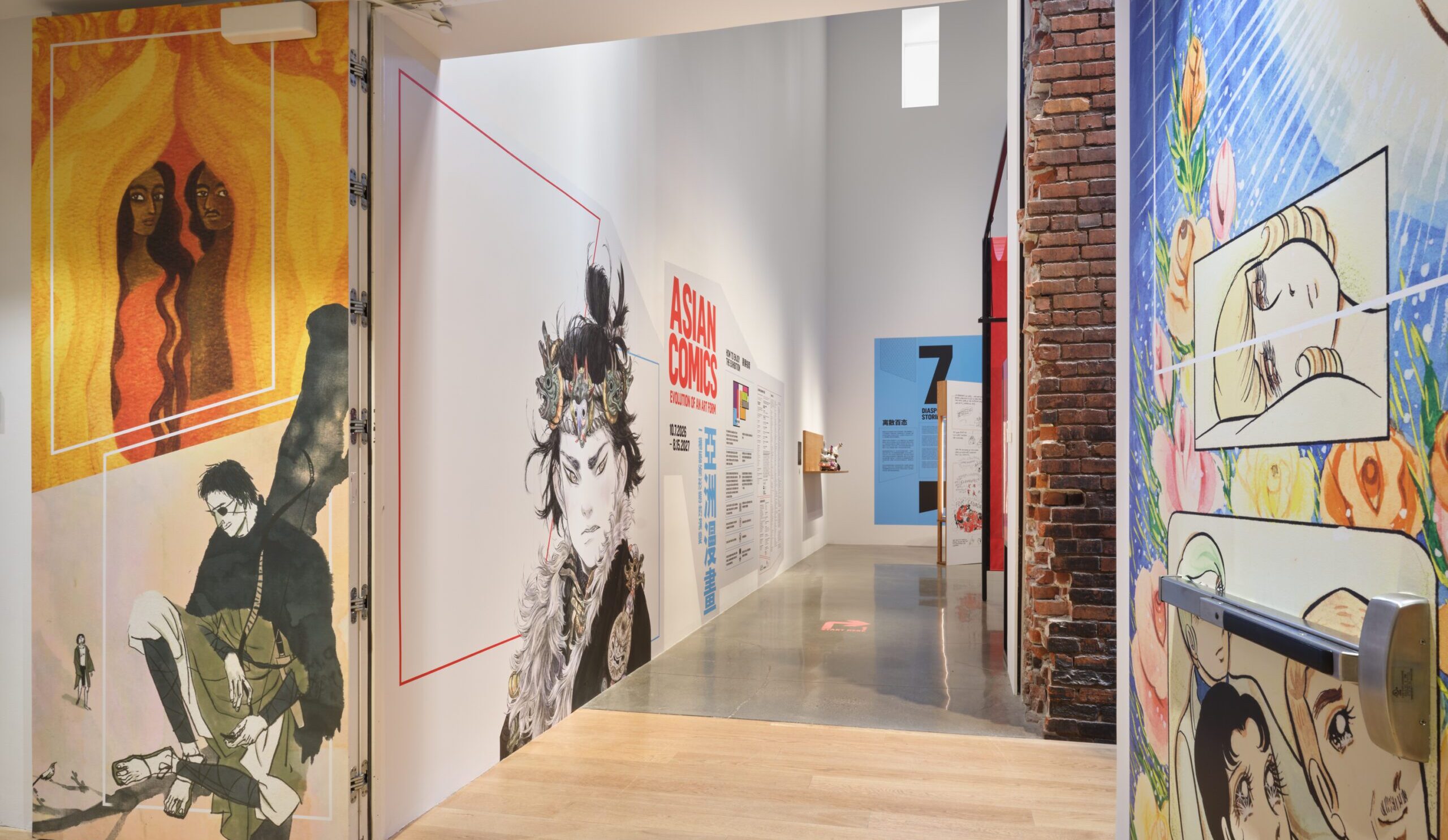
Vancouver, B.C., October 6, 2026 – The Chinese Canadian Museum and the Barbican Centre are excited to announce the Canadian premiere of Asian Comics: Evolution of an Art Form, opening October 7, 2026. On view through August 15, 2027, the exhibition explores the rich history, diversity, and cultural significance of Asian comics, tracing the evolution of visual storytelling across Asia from early graphic traditions to contemporary digital innovation.
Bringing together more than 400 works, including Japanese woodblock prints, Hindu scroll paintings, printed comics, contemporary illustrations, and digital media, the exhibition underscores the global significance of Asian comics as an art form, demonstrating their enduring influence on visual culture while connecting histories, cultures, and communities across borders and generations. Presented for the first time in Canada at the Chinese Canadian Museum, the Vancouver presentation expands the internationally touring exhibition through a newly curated section, Diaspora Stories, featuring the work of Chinese Canadian artists and authors.
Asian Comics was developed by the Barbican Centre in London and has toured internationally since 2017, with successful presentations across Europe and the United States, most recently at the Museum of Pop Culture (MoPOP) in Seattle.
“We are incredibly excited to work with the Barbican and for the Chinese Canadian Museum to be the first institution in Canada to bring Asian Comics to audiences here,” says Dr. Melissa Karmen Lee, CEO of the Chinese Canadian Museum. “Comics are one of the most dynamic and widely loved forms of popular culture, with the power to connect generations, cross borders, and shape how people see the world around them. By bringing this landmark exhibition to Canada, and expanding it to include the work of Chinese Canadian artists, we are celebrating the extraordinary creativity, and enduring appeal of Asian comics, while placing Chinese Canadian stories within the broader history of this truly global art form.”
“The Barbican Centre is delighted to bring our acclaimed touring exhibition, Asian Comics: Evolution of an Art Form, to Canada for the first time. Representing a wide range of countries and cultures, this expansive exhibition highlights comics as an art form that is open to all.
We are proud to showcase original works by masters of the medium, including Osamu Tezuka, creator of the iconic Astro Boy, alongside work by first-time creators such as Vannak Anan Prum, a formerly enslaved fisherman who used comics to share their story. This unique exhibition explores comics through many lenses, including history, folklore, biography and fantasy, while also examining their influence on film, fashion, animation and video games”, says Patrick Moran, Head of Commercial Strategy and Partnerships at Barbican Immersive.
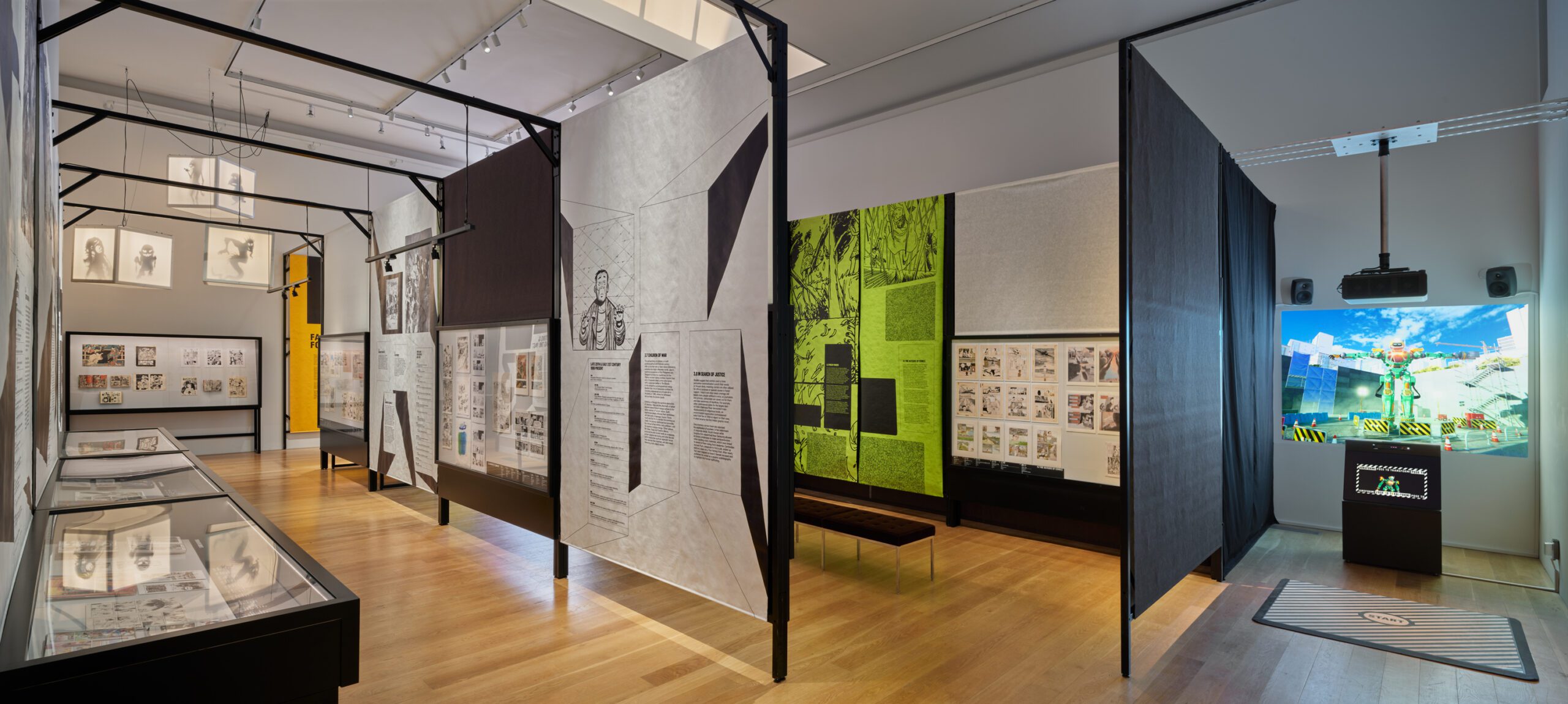
Curated by renowned comics historian Paul Gravett with a team of more than 20 international advisors, Asian Comics celebrates key creators, iconic characters, landmark publications, and original artworks from more than 20 countries and regions. Visitors will encounter original comic art, rare printed comics, Japanese woodblock prints, Hindu scroll paintings, animation cels, digital media, and contemporary illustrations demonstrating how comics have evolved across cultures, generations, and artistic traditions.
Highlights include 19th-century woodblock prints by masters such as Utagawa Kuniyoshi, pages from Katsushika Hokusai’s famed Hokusai Manga (1814), and original Astro Boy animation cels by Osamu Tezuka, the “god of manga”.
“It’s truly an exciting step for the ongoing tour of Asian Comics: Evolution of an Art Form to debut at the Chinese Canadian Museum. This offers a chance to share an unprecedented exploration of diverse comics cultures created and enjoyed across Asia. Naturally, this thematic exhibition celebrates manga from Japan, now a global phenomenon. But it always ventures further across the whole region and through the decades, comparing and counterpointing their graphic narratives. Vancouver’s community including its vibrant Chinese diaspora can enjoy Chinese comics, from pioneers of lianhuanhua legends to cutting-edge creatives in digital media. Many other nations which are rarely presented, such as Mongolia and Bhutan, also have examples in the spotlight. The message is the medium – and how the medium of comics is both historically enriching and also today regenerating, cross-pollinating and surprising, more than ever,” says Paul Gravett, Guest Curator of Asian Comics: Evolution of an Art Form.
The exhibition unfolds across seven thematic sections: Mapping Asian Comics, Fables and Folklore, Recreating and Revisiting the Past, Stories and Storytellers, Censorship and Sensibility, Multimedia Asian Comics, and Diaspora Stories.
Curated by Olivia Chow, Director of Curatorial Programs at the Chinese Canadian Museum, Diaspora Stories expands the internationally touring exhibition by bringing Chinese Canadian comics into dialogue with broader histories of Asian visual storytelling. The section features work by David H. T. Wong, Zoe Si, Lee Lai, Ruth Chan, and Hartley Lin, alongside archival comics by Vivian Chan Moy originally published in The Asianadian (1978–1985), a landmark publication in Asian Canadian cultural history.
“Comics have a remarkable ability to make complex histories deeply personal,” says Chow. “The artists in this section remind us that there is no single diasporic story. Through visual storytelling, they connect individual lives and everyday experiences to broader questions of culture, history, and community, inviting us to see familiar stories from new perspectives.”
About Barbican
A world-class art and learning organisation, the Barbican pushes the boundaries of all major art forms including dance, film, music, theatre, and visual arts. Its creative learning programme further underpins everything it does. Over 1.1 million people attend events annually, hundreds of artists and performers are featured, and more than 300 staff work onsite. The architecturally renowned centre opened in 1982 and comprises the Barbican Hall, the Barbican Theatre, The Pit, Cinemas One, Two and Three, Barbican Art Gallery, a second gallery The Curve, foyers and public spaces, a library, Lakeside Terrace, a glasshouse conservatory, conference facilities and three restaurants. The City of London Corporation is the founder and principal funder of the Barbican Centre.
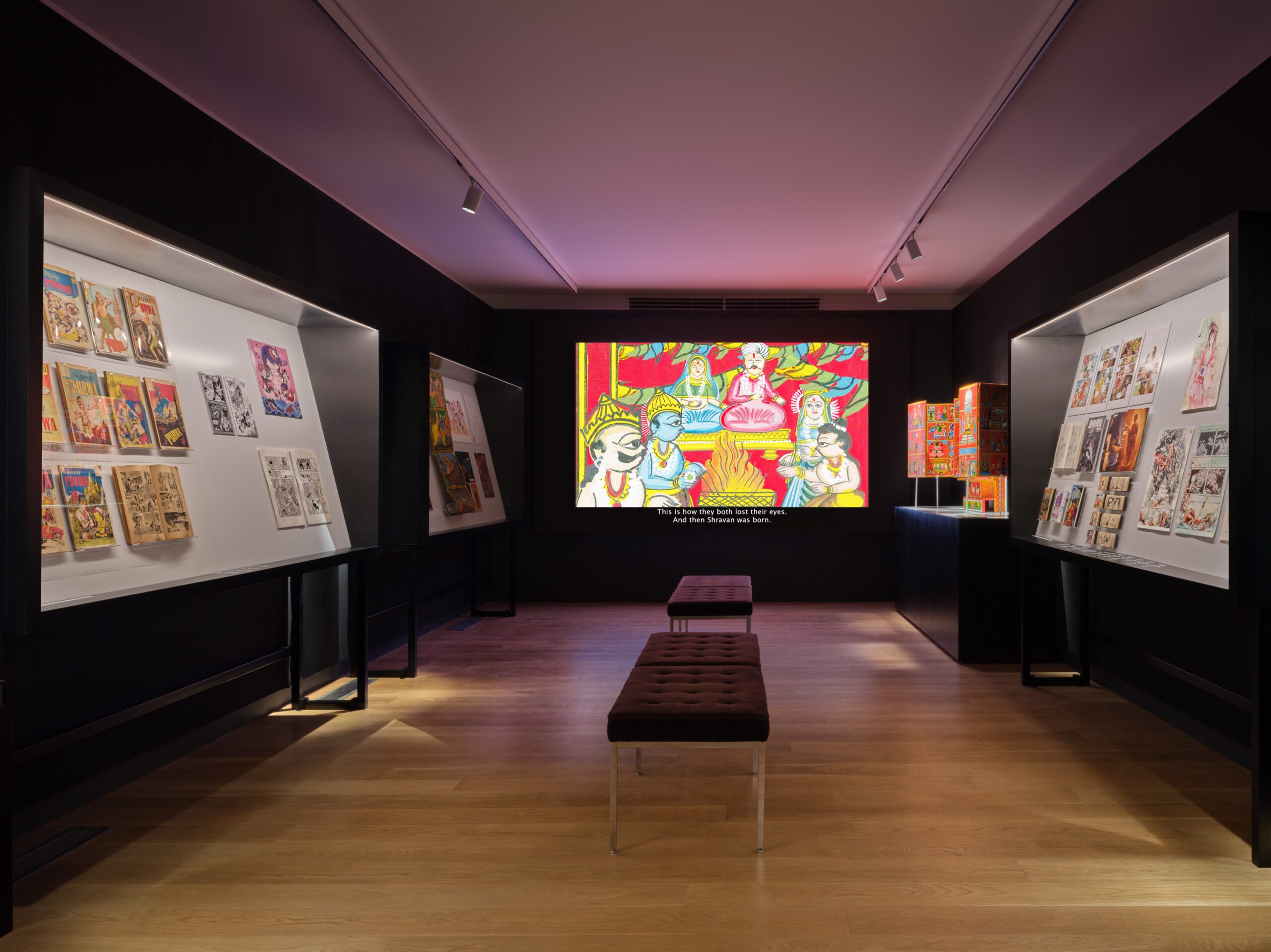
“Installation view of Asian Comics: Evolution of an Art Form, exhibition curated and organized by the Barbican Immersive, 2026. Image courtesy of the Chinese Canadian Museum. © Rachel Topham.”